


Blogs
Services
Web Development, Website Strategy, WordPress Tips 01 Feb 2026
Bareilly’s Digital Leap: Mastering Site Responsive Design for India’s Mobile-First Audience

Writen by Tech Contributors
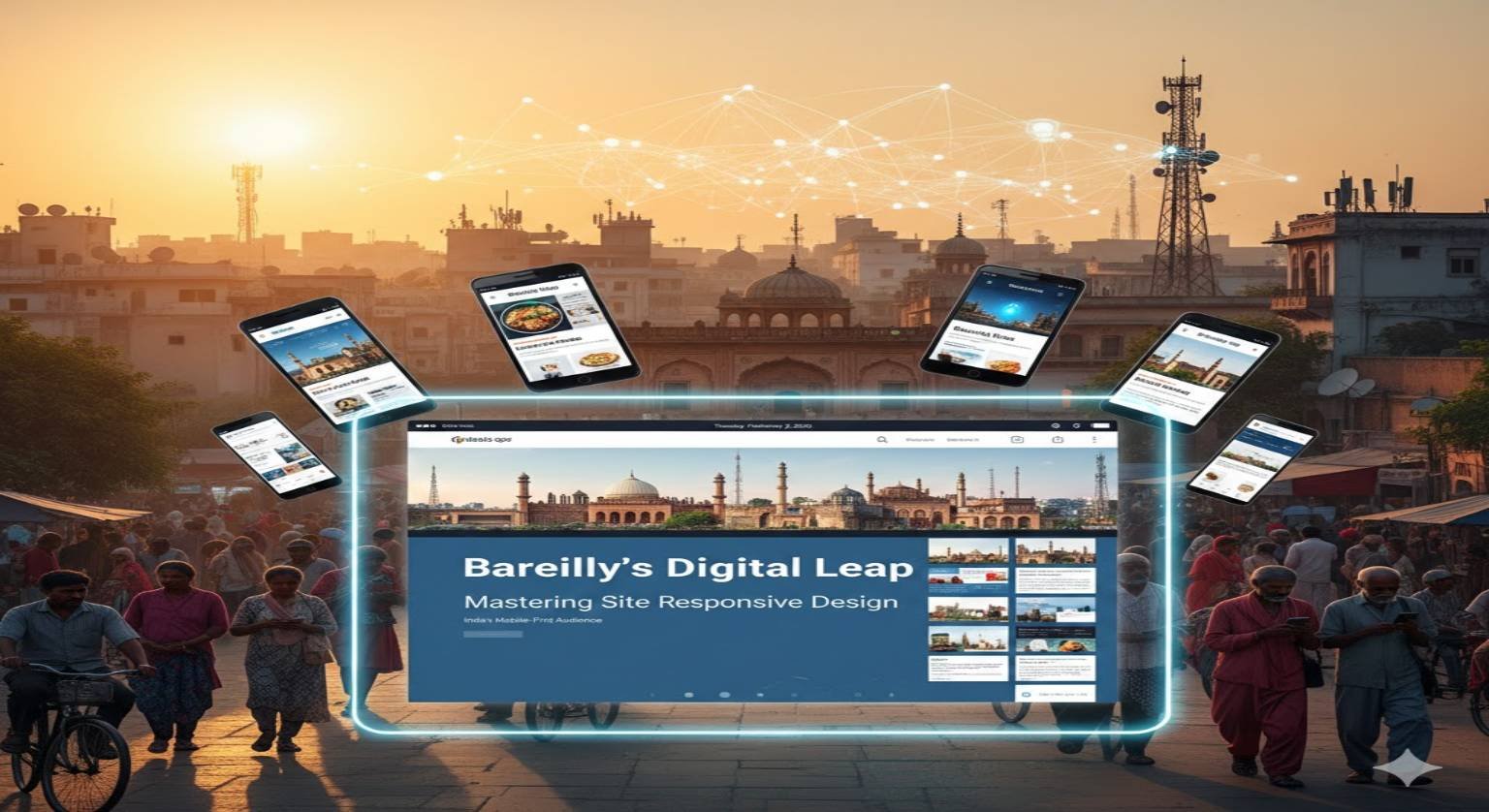
In Bareilly, a city rapidly embracing the digital age, the significance of site responsive design for businesses operating across India cannot be overstated. With an increasing number of Indian consumers accessing the internet via mobile devices, having a website that seamlessly adapts to any screen size—be it a smartphone, tablet, or desktop—is no longer a luxury but a fundamental necessity. This approach ensures optimal user experience, enhances search engine visibility, and drives engagement for local Bareilly enterprises aiming to capture the broader Indian market.
What is Site Responsive Design?
Site responsive design refers to a web development approach that creates dynamic changes to a website’s layout and content based on the screen size and orientation of the device being used to view it. Instead of creating separate websites for different devices (like a desktop version and a mobile version), a single responsive website uses flexible grids, images, and CSS media queries to automatically adjust itself. This ensures that users always have an optimal viewing and interaction experience, regardless of how they access the site.
For businesses in Bareilly, understanding site responsive design means understanding how to present their services and products effectively to a diverse user base across India. It’s about providing accessibility and usability that caters to the ubiquitous smartphone culture prevalent in the country.
Why Choose Site Responsive Design for Businesses in Bareilly, India?
Adopting site responsive design offers a multitude of advantages for businesses aiming to thrive in Bareilly and across the competitive Indian digital landscape. The benefits extend beyond aesthetics, impacting core business objectives.
- Dominant Mobile Usage: India has a massive mobile internet user base. A significant portion of online traffic, including potential customers in Bareilly and other cities, originates from smartphones and tablets. Site responsive design ensures these users have a fluid experience.
- Improved User Experience (UX): A website that’s easy to navigate and read on any device leads to higher user satisfaction, lower bounce rates, and increased conversions. Frustration with non-responsive sites often leads users to abandon them quickly.
- Enhanced SEO Performance: Search engines like Google favor responsive websites. They are easier to crawl and index, and Google explicitly recommends responsive design as an industry best practice, positively impacting search rankings for businesses targeting the Indian market.
- Cost-Effectiveness: Maintaining a single responsive website is often more cost-effective than developing and managing separate websites for desktop and mobile, reducing development time and maintenance overhead.
- Wider Reach: By catering to all devices, businesses in Bareilly can reach a broader audience, including those in remote parts of India who might rely solely on mobile devices for internet access.
- Future-Proofing: With new devices and screen sizes constantly emerging, site responsive design offers a flexible foundation that can adapt to future technological advancements without requiring a complete overhaul.
How to Implement Site Responsive Design?
Implementing site responsive design involves several key steps, whether you’re building a new website for your Bareilly business or revamping an existing one. It requires careful planning and execution.
- Mobile-First Approach: Design and develop for mobile devices first, then scale up to larger screens. This ensures core content and functionality are prioritized for the most common access point in India.
- Flexible Grid Layouts: Use fluid grids instead of fixed-width layouts. This allows elements to resize proportionally based on the viewport size.
- Flexible Images and Media: Implement techniques that allow images and videos to scale up or down without losing quality or breaking the layout.
- CSS Media Queries: Utilize CSS media queries to apply different styles based on device characteristics like screen width, height, and orientation.
- Viewport Meta Tag: Include the viewport meta tag in your HTML to instruct browsers on how to control the page’s dimensions and scaling.
- Testing Across Devices: Thoroughly test your website on various devices and browsers to ensure seamless functionality and appearance.
- Choose the Right Platform/Developer: For businesses in Bareilly, partnering with experienced web developers familiar with site responsive design best practices in India is crucial.
Cost in Site Responsive Design, India
The cost of implementing site responsive design for a business in Bareilly, targeting the Indian market, can vary significantly based on several factors. It’s an investment, and understanding these variables helps in budgeting.
- Website Complexity: A simple brochure website will cost less than an e-commerce platform with intricate features and integrations.
- Number of Pages: More pages generally mean more design and development work.
- Custom Design vs. Templates: Custom designs are more expensive but offer unique branding. Template-based solutions are more affordable.
- Content Creation: If content (text, images, videos) needs to be created or optimized for responsive display, this adds to the cost.
- Developer Expertise: Highly experienced developers or agencies typically charge more than freelancers. Location also plays a role, with rates varying across India.
- Ongoing Maintenance: While not part of the initial implementation, budgeting for updates, security, and minor adjustments is important.
For a typical small to medium-sized business in Bareilly, a basic responsive website might range from INR 25,000 to INR 1,00,000+. More complex projects can easily go into several lakhs. It’s crucial to get detailed quotes and compare services.
Timeline for Site Responsive Design Project
The timeline for a site responsive design project also depends heavily on the scope and complexity. However, a general breakdown for businesses in Bareilly looking to enhance their online presence in India would include:
- Discovery and Planning (1-2 Weeks): Understanding business goals, target audience, content strategy, and technical requirements.
- Wireframing and Prototyping (2-3 Weeks): Creating visual blueprints and interactive mockups to define the layout and user flow across different devices.
- Design and UI/UX (3-5 Weeks): Developing the visual aesthetics, branding, and user interface elements, ensuring responsiveness is integrated from the start.
- Development and Coding (4-8 Weeks): Building the website using HTML, CSS, JavaScript, and integrating the responsive framework. This is where media queries and flexible grids come into play.
- Content Integration (1-2 Weeks): Populating the website with text, images, videos, and other media, optimizing them for responsive display.
- Testing and QA (1-2 Weeks): Rigorous testing across various devices, browsers, and screen sizes to identify and fix bugs, ensuring optimal performance and responsiveness.
- Launch and Post-Launch Support: Deploying the website and providing ongoing maintenance and updates.
Overall, a medium-sized site responsive design project for a Bareilly business could take anywhere from 8 to 16 weeks from conception to launch.
Benefits of Site Responsive Design for Bareilly Businesses
Beyond the technical aspects, the real-world benefits for businesses in Bareilly are substantial, directly impacting growth and customer engagement across India.
- Increased Customer Engagement: Users are more likely to interact with a site that is easy to use and visually appealing on their device, leading to longer visit durations and more page views.
- Higher Conversion Rates: A seamless user experience translates to easier navigation through sales funnels, resulting in more inquiries, leads, or direct sales.
- Improved Brand Reputation: A modern, functional website enhances a brand’s image, positioning the Bareilly business as professional and tech-savvy in the eyes of the Indian consumer.
- Better Analytics Reporting: With a single website, tracking user behavior and performance metrics becomes simpler and more unified, providing clearer insights into marketing efforts.
- Competitive Edge: Many local businesses in Bareilly might still rely on outdated, non-responsive websites. Adopting site responsive design gives you a significant advantage.
- Lower Maintenance Costs: Managing one codebase instead of multiple separate sites reduces the effort and cost associated with updates and security patches.
Best Practices for Site Responsive Design in India
When implementing site responsive design for the Indian market, certain considerations are paramount to maximize effectiveness.
- Optimize for Data Usage: Many users in India, particularly outside major metros, may have limited or slower internet connections. Optimize images, videos, and code to reduce load times.
- Prioritize Speed: Website speed is critical. Use efficient coding, lazy loading for images, and effective caching strategies.
- Focus on Touch-Friendly Interfaces: Design navigation and interactive elements with touchscreens in mind, using larger tap targets and intuitive gestures.
- Regional Language Support: If targeting diverse regions, consider incorporating multilingual support, especially for Hindi and other major Indian languages.
- Accessibility Standards: Ensure your responsive design also adheres to web accessibility guidelines, making it usable for people with disabilities.
- Thorough Real Device Testing: While emulators are useful, testing on actual popular devices prevalent in India (various Android phones, different screen sizes) is essential.
- Consistent Branding: Maintain brand identity and messaging consistently across all screen sizes, even as layouts adapt.
For businesses in Bareilly, embracing site responsive design is a strategic move towards a thriving digital future. It’s about ensuring your online presence is robust, accessible, and ready to meet the demands of India’s mobile-first user base.
For more insights, explore our Website Development Services page to discover tailored digital solutions that help businesses grow in site responsive design, India.
FAQs
We’ve answered the most common questions to help you better understand this topic. Get clear insights before making any decisions.
The primary benefit is reaching India's vast mobile-first audience effectively. A responsive website ensures your content looks good and functions well on any device, leading to better user experience, higher engagement, and improved search engine rankings.
Yes, absolutely. Google explicitly recommends and favors responsive websites. A single, responsive site is easier for search engines to crawl and index, which can significantly boost your visibility in search results for the Indian market.
While the initial development might seem slightly more involved than a basic static site, in the long run, responsive design is often more cost-effective. You maintain one website instead of separate desktop and mobile versions, saving on maintenance, updates, and content management.
The timeline varies based on complexity. A typical medium-sized site responsive design project for a business in Bareilly could take anywhere from 8 to 16 weeks, covering planning, design, development, and testing phases.
Look for developers with a strong portfolio in site responsive design, who understand the specific needs and user behaviors of the Indian market, including aspects like mobile-first indexing, site speed optimization for varied network conditions, and potential for regional language support.