Your website might be live, but is it actually working for your business? In 2026, having a website is not enough. The real question is whether it is generating leads, building trust, and converting visitors into customers.
Many business owners do not realise their website is quietly losing them business every single day. Here are five clear signs it is time for a redesign.
Sign 1 — Your Website Is Getting Visitors But No Enquiries
If people are landing on your website but not contacting you, something is broken in the experience. It could be unclear messaging, weak calls to action, a confusing layout, or too many steps between a visitor arriving and them reaching out.
A well designed website should guide visitors naturally toward the next step. If yours is not doing that, the problem is rarely the traffic — it is the website itself. The average website conversion rate across industries sits between 2% and 5%. If yours is consistently below 1%, a redesign is overdue.
Sign 2 — Your Website Looks Outdated Compared to Your Competitors
Pull up your top three competitors’ websites and compare them to yours. If theirs feel more modern, more professional, and more trustworthy, your potential customers are noticing the same thing — and they are choosing accordingly.
First impressions happen in seconds and they are almost entirely visual. A dated website — cluttered layouts, old fonts, low quality images, carousel sliders — signals to visitors that your business may be outdated too. You do not need the flashiest design, but you do need one that communicates credibility and professionalism in 2026.
Sign 3 — Your Website Does Not Work Properly on Mobile
More than half of all web traffic in 2026 comes from mobile devices. If your website requires pinching and zooming, has buttons that are hard to tap, or text that is too small to read on a phone — you are losing a significant portion of your potential customers the moment they land on your page.
Mobile optimisation is also a direct ranking factor for Google. A website that performs poorly on smartphones will struggle to appear in search results regardless of how good your content is. Test your website on your phone right now. If anything feels frustrating or broken, your visitors feel the same way.
Sign 4 — Your Website Loads Slowly
Page speed is one of the most critical factors in both user experience and SEO. If your website takes more than 3 seconds to load, visitors will leave before they even see what you offer. Research consistently shows that even a one second delay reduces conversions significantly.
Slow websites are often caused by bloated code, uncompressed images, too many plugins, or outdated hosting. Sometimes these can be patched individually, but if the underlying structure is the problem, a full redesign on a clean foundation will deliver far better results than trying to fix an old site piece by piece.
Sign 5 — Your Website No Longer Reflects Your Business
Businesses grow and evolve. If your website was built three or more years ago, it may no longer accurately represent your services, your brand, or the customers you are trying to attract. An outdated website creates a disconnect — visitors get one impression online and a completely different one when they engage with you directly.
If you find yourself telling potential clients to “ignore the website” or feeling embarrassed to share your URL, that is the clearest sign of all. Your website should be something you are proud to send people to — not something you apologise for.
What To Do Next
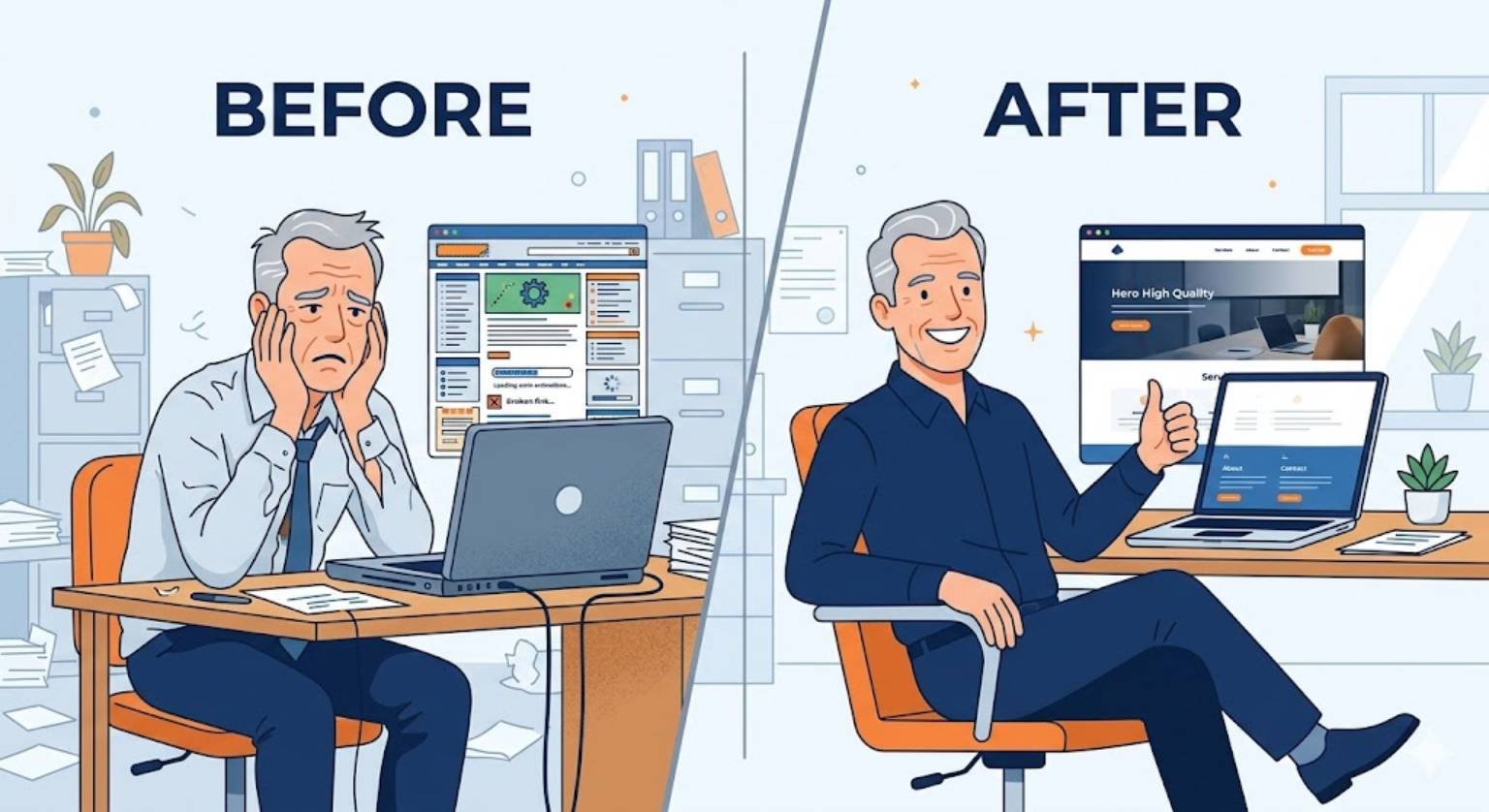
If two or more of these signs apply to your website, a redesign is not just a cosmetic upgrade — it is a business investment. A well built, fast, and conversion focused website can directly increase your leads, improve your Google rankings, and build trust with potential clients before they ever speak to you.
At Tech Contributors, we specialise in custom WordPress website redesigns that are built for performance, SEO, and lead generation. If your current website is holding your business back, get in touch with us today for a free consultation.